
You want every young person to have a chance to go on the trip. But travel and accommodation add up, and asking the same parents to cover another cost isn't always an option. A fundraiser can help close the gap—as long as it doesn't become a second job for your volunteers.
Parents, grandparents and church members can help in different ways: buying a slice of cake, paying for a car wash or giving towards a place for someone who needs it. The task is to choose an ask your group can deliver, then make it easy to act on.
These church fundraiser ideas for youth groups will help you choose one manageable fundraiser for a camp, retreat or mission trip. You'll also find wording for your appeal and a way to keep supporters' gifts distinct from families' trip payments.
If you've already chosen your fundraiser, jump to setting up your trip payment link.
Choose a fundraiser your volunteers can actually run
Before you book a hall or buy supplies, work out the gap between the trip cost and the family contributions you've agreed. That's your fundraising target. Allow for the fundraiser's own costs too. For example, £300.00 in cake-stall takings less £80.00 in supplies leaves £220.00 before any payment fees.
For a small group, start with an after-service cake stall: you're meeting people where they already are. A dinner makes more sense if you have kitchen volunteers and enough advance bookings to cover food. Choose a service day if your students would rather do practical work than host an event.
Car wash or yard work day
Good for a group that wants to get outside and do something useful. Offer a supervised car wash at church or agree gardening jobs in advance, so you know what equipment and adult help you'll need. Put a suggested donation and the trip's donation QR code on your sign for supporters without cash.
Pancake breakfast or spaghetti dinner
Choose this when you have access to a kitchen and adults who can manage food preparation. Students can welcome guests, serve and clear. Take fixed-price payments in advance to help plan portions, and share a separate donation link with people who'd like to help but can't attend.
Sponsor-a-student appeal
Useful when the main obstacle is affordability rather than a lack of interest in the trip. Invite gifts towards a shared fund that helps young people attend, and explain how the church will allocate it. Families should be able to ask for help privately, without a public story or named appeal for their child.
Service auction
This suits a group with a few specific skills to offer, such as gardening or help setting up a phone. Agree each task, its limits and adult supervision before taking bids, following your church's safeguarding rules. Have a leader manage the auction and send the winning bidder a payment link afterwards; the bidding itself happens outside Payhere.
Coffee and baked goods Sunday
Start here if you have a small team and little time to organise. Ask volunteers to agree what they'll bring, check the church's food and allergy arrangements, and give students roles on the table. Label the trip clearly and display a donation link or QR code for people who want to give without buying anything.
Talent night or lock-in
A talent night suits students who want to perform; a lock-in is an overnight church activity that needs a bigger supervision commitment. Price the event only after budgeting for food, staffing and the venue. Use a fixed-price payment link for admission and a separate donation link for extra gifts, rather than treating ticket purchases as donations.
Pick one event before adding another. If it needs more helpers than you have, scale it down rather than relying on the same two parents to fill every gap. For a wider congregation appeal, explore these small church fundraising ideas.
Give people a specific reason to help
Once you've chosen the event, tell people what their help will make possible. “Support our youth” leaves them guessing. A more useful ask might be: “Help our group cover travel for the June retreat so we can keep the cost manageable for families.”
Give the appeal a trip name, a target and a deadline. Say what you'll do if it raises more than needed or the trip can't go ahead, after agreeing that with church leadership. Supporters should know the purpose of their gift before they give.
Create a donation link for that appeal and use it consistently in the church email, bulletin and messages to relatives. For a noticeboard or event table, turn the same URL into a QR code with a QR-code tool. Scan a printed copy before putting up the posters: it should open the right trip's donation page, not a family deposit page.
A fundraising message you can copy
Replace every bracketed detail in this example, including the fund-use line you've agreed with your treasurer. Remove the event sentence if you're making a direct appeal without an event. Send family deposit requests separately so nobody mistakes a voluntary gift for a booking payment.
Hi [name or church community],
Our youth group is raising [amount] towards [what the money will cover] for [trip name] by [date]. Your support will help [explain how the group will benefit].
The young people are organising [event] at [place] on [date and time]. If you'd like to give towards the trip, you can use [donation link] or scan the QR code on our church noticeboard. Every gift is voluntary.
[Explain the agreed use of surplus donations and what happens if the trip is cancelled.]
We'll share an update [when and where]. If you have a question, please contact [adult leader] at [church contact details]. Thank you for helping our young people take part.
[Your name], [role and church name]
Keep deposits and donations separate
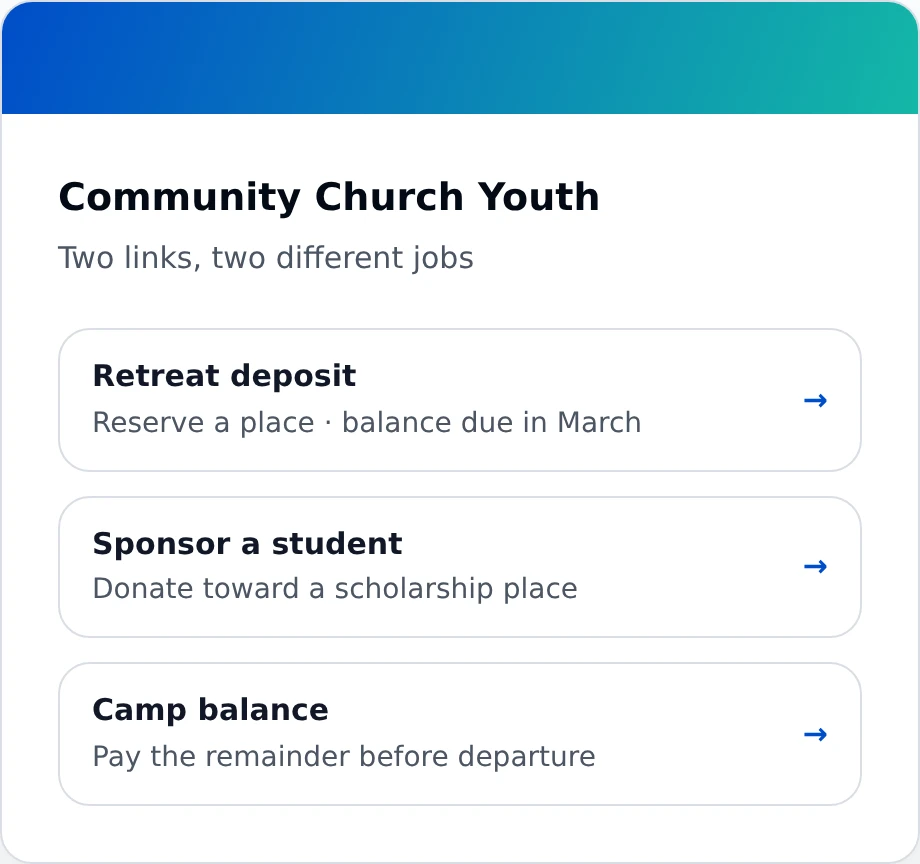
After the appeal goes out, you may be collecting two kinds of money: family payments towards a booked place, and voluntary gifts towards the trip. Give each its own link and label. That helps a grandparent who wants to donate avoid accidentally paying a deposit, and helps your treasurer record the money for the right purpose.
Deposits secure a place
Tell families the total cost, deposit amount and balance due date before taking payment. Explain what the deposit books and what happens if their child withdraws, so parents can make an informed commitment.
Donations fund the group
A supporter should be able to tell whether they're giving towards this trip, a fund to help families afford places or ongoing youth work. Keep those purposes clear instead of using one vague link for everything.
Scholarships stay private
Give families a named pastor or leader to contact about financial help. You can explain that support is available without publishing who receives it or asking students to explain their circumstances publicly.
Use names such as “June retreat — family deposit” and “June retreat — donations”, and match them in your treasurer's records. Separate links don't create separate bank accounts or set money aside automatically. Agree how the funds will be tracked and receipted; this guide is not tax or accounting advice.
Let parents spread the balance when needed
If the full balance is difficult to pay at once, agree a schedule privately with the family. For example, a £180.00 trip with a £60.00 deposit leaves £120.00: three instalments of £40.00. Put that remaining total and the payment dates in writing. These are illustrative trip costs, not Payhere fees.
For equal, regular instalments, Payhere supports a recurring payment plan with Cancel after set to the number of payments. That gives the plan an end; Minimum payments alone doesn't. Check the amount, interval and final payment date before sharing, allowing time to pay your trip suppliers. Follow the payment-plan setup guide for the controls, and keep a manual record of any missed payments so you can follow up with the family.
Set up a Payhere link for your trip in three steps
Once you've agreed the purpose and payment terms, you can give people a way to pay without building a trip website. Start with the link you need now: a donation appeal for supporters or a fixed-price payment for families.
Connect
Create a Payhere account and connect your church's Stripe account. Payhere uses that account to take payments. Check with whoever manages church finances before setting it up in a volunteer's personal account.
Create
Choose a donor-chosen amount for voluntary gifts or a fixed-price one-time payment for a deposit or ticket. Add the trip name and explain what the payment is for. Follow the one-off donation walkthrough if you're setting up the appeal first.
Share
Open the payment page on a phone and check the name, amount or donation option, currency and payment schedule. Then copy the right link into your message. Test any printed QR code too, so supporters don't discover a mistake on the day.
Payhere charges a platform fee on paid transactions alongside Stripe processing fees. Check current Payhere pricing when budgeting; the amount you collect isn't all available to spend on the trip.
Close the loop with families and supporters
After the event, count what you've raised after costs and fees with the treasurer, then compare it with your target. If there's still a gap, you can make a specific follow-up ask rather than starting another fundraiser without knowing what it needs to achieve.
Thank supporters and tell them what their help made possible. Follow safeguarding rules for any photos or student stories you share; a group update doesn't need to identify families receiving financial help. Keep a cash or cheque option for people who need it, and include those gifts in the same trip records.
If someone wants to support youth work beyond this trip, offer that separately through a recurring donation link. Don't turn a one-off trip appeal into an ongoing commitment without making the difference clear.
“Payhere was cost effective, quick to set up, easy to manage and seamless for our donors—absolutely vital in our sector.”

Questions youth leaders ask about church fundraising
Should a youth trip deposit use the same link as donations?
No—give each purpose its own link. A family deposit pays towards a booked place; a donation is a voluntary gift to the appeal. Label both with the trip name, and put the balance deadline and withdrawal terms in the family's message. Your treasurer should agree how each is recorded and receipted; a payment receipt doesn't establish eligibility for tax relief.
Can parents pay for a church youth trip in instalments?
Yes. Agree the remaining balance after any deposit, then write down the amount and dates. For equal, regular instalments, Payhere supports recurring payment plans that end after a set number of payments using Cancel after. Minimum payments alone doesn't stop a plan. Check that the final payment is due before you need to pay suppliers, and follow up if a charge fails; a schedule doesn't guarantee collection.
How do we share a fundraising link or QR code safely?
Use the same donation link in church emails, the bulletin and approved group messages. Generate a QR code from that URL with a QR-code tool for printed materials. Scan a printed copy on a phone and check the trip name and payment type before displaying it. Include an adult church contact, not a child's details, and keep private family circumstances out of the appeal.
How do we keep money for different trips separate?
Name each link for its trip and purpose, such as June retreat — donations, and use the same name in the treasurer's records. Record cash and cheque gifts against that trip too. Separate links help identify payments; they don't create separate bank accounts or automatically set funds aside. Agree the accounting arrangements with your treasurer before launching the appeal.
Which church fundraiser should a small youth group start with?
Start with an after-service cake stall if you have a small team: the congregation is already there and you can keep the event short. Agree supplies, food arrangements and student roles before announcing it. If your group prefers practical work and has the equipment and adult supervision, choose a car wash instead. Work out what you'll keep after costs before deciding whether either can meet your target.
What should we tell supporters if the trip is cancelled or raises more than needed?
Explain the agreed plan in the appeal before people give, rather than deciding after the money arrives. Ask church leadership and the treasurer to confirm how surplus or cancellation will be handled. Keep that donation wording distinct from family deposit and refund terms. If plans change, contact the people affected and follow the church's policy and applicable requirements; don't quietly move gifts to another trip.
Start with one fundraiser and one clear ask
Choose the event your students and volunteers can deliver, agree what the money will cover and adapt the message above. Then create the donation link for that appeal. You don't need a calendar full of fundraisers to give people a clear way to help.
Create your trip donation link →