
The price is only part of a good payment page. Customers also need to recognise your business, understand the button they are pressing and know what happens after payment.
Payhere's account branding settings and each link's Advanced tab handle different parts of that experience. Start with a working payment link, then change only the options your offer needs.
Before you start
Have your logo, brand colour, support email and website address ready. Prepare any post-payment instructions and a thank-you page address if you use one. Check whether you are editing account-wide branding or one payment link before saving.
1. Set recognisable account branding
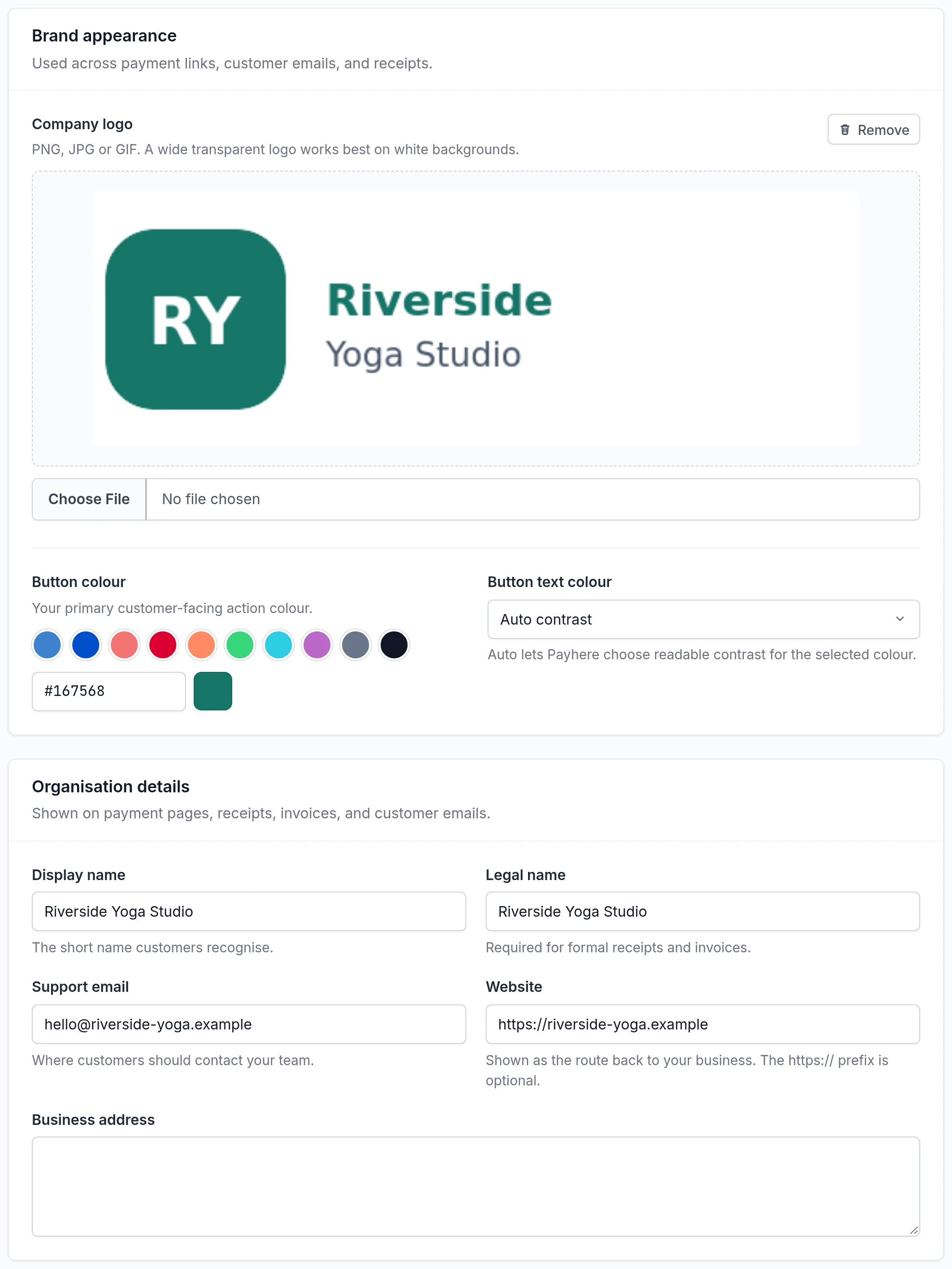
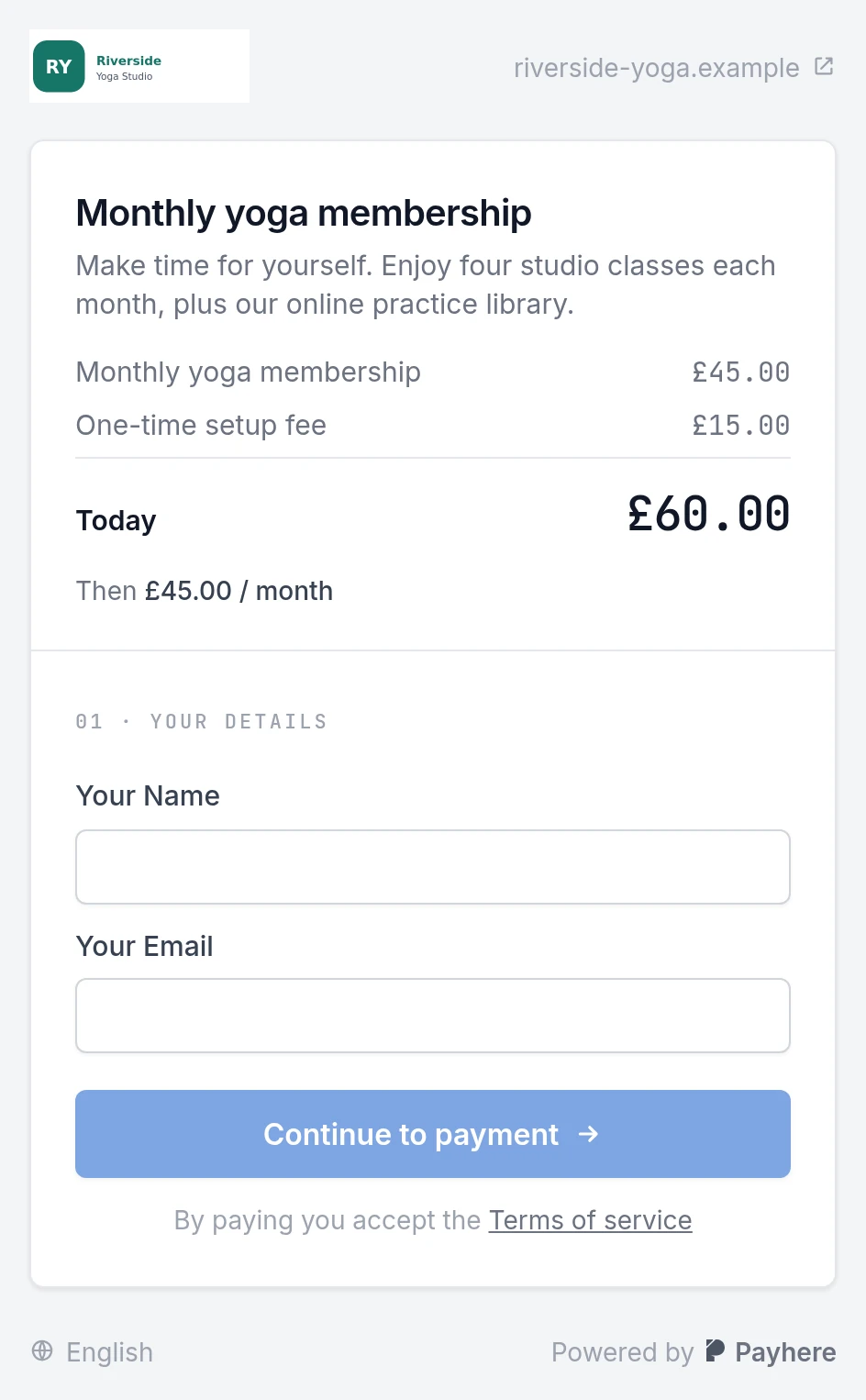
Open account settings from your dashboard profile menu. Upload a logo, set the pay button colour, choose white, black or automatic button text colour, add a support email for receipts and add the website shown on payment forms.
Use your normal business identity, not a different logo for every offer. Choose readable button text and check contrast on the payment page. Keep the support email monitored so a receipt gives the customer a useful route back to you.
2. Configure the individual link
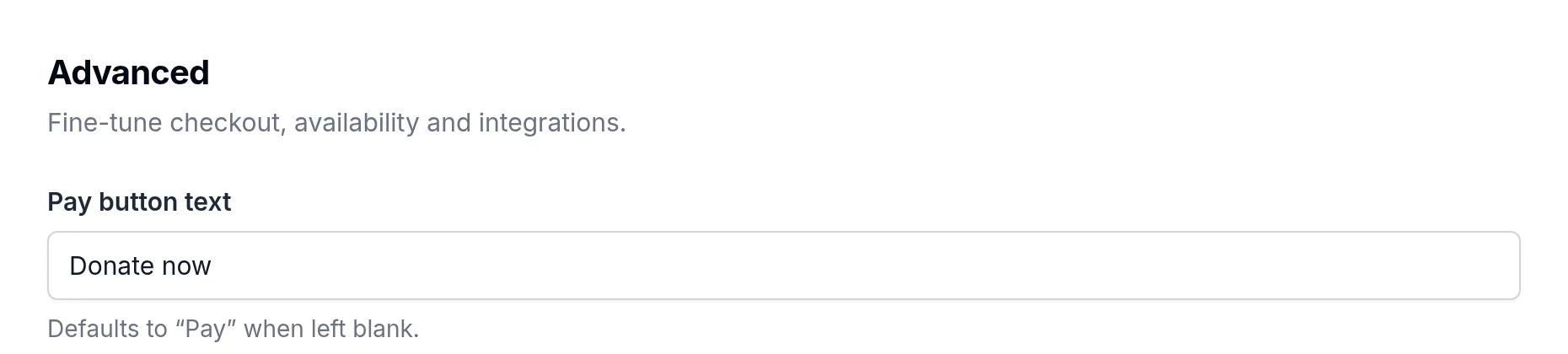
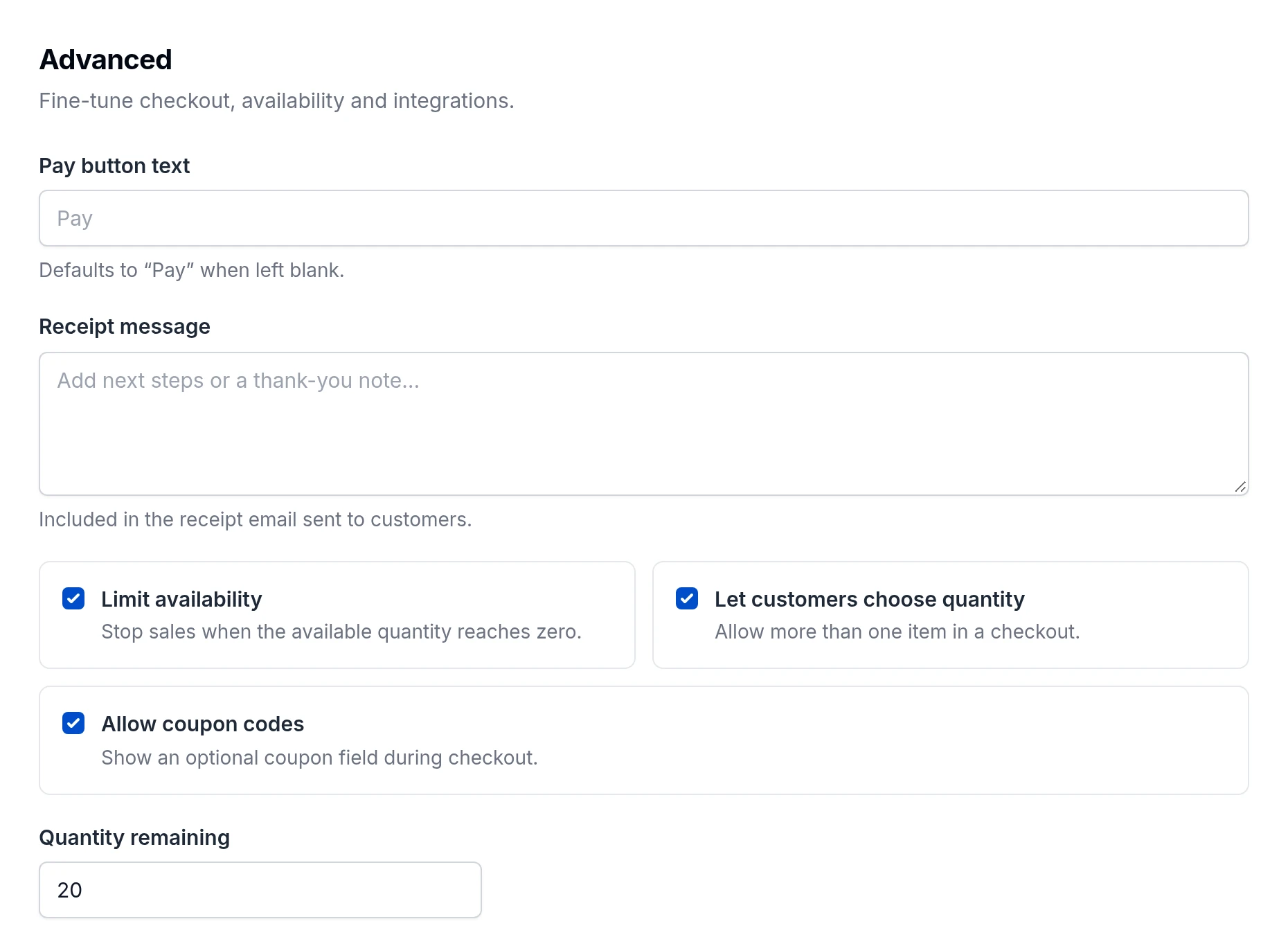
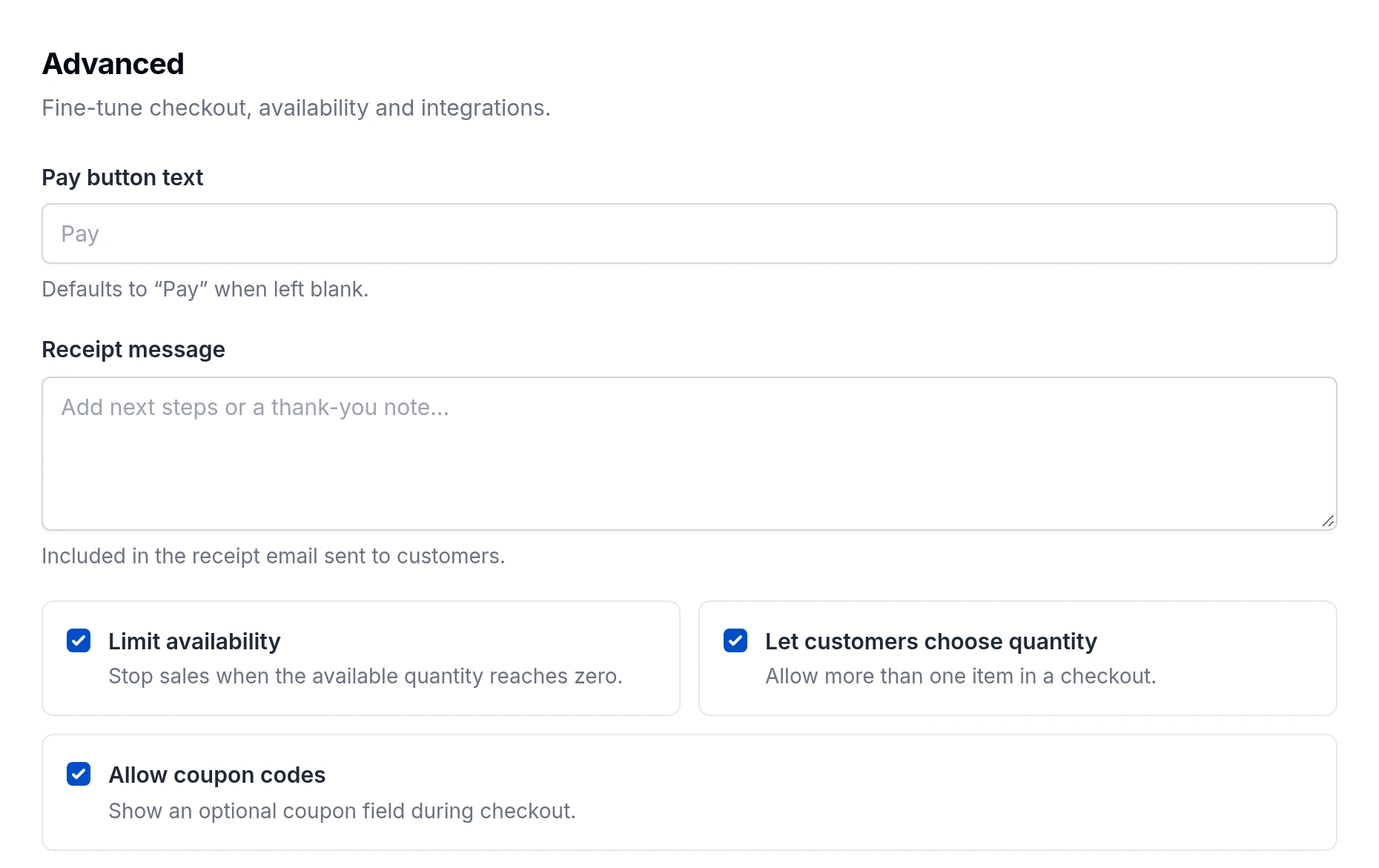
Open Advanced when creating or editing the payment link. Useful options include:
- Pay button text: use a concrete action such as “Donate” or “Pay for your workshop”.
- Receipt text: add instructions specific to this offer. For a workshop, tell customers when and how joining details will arrive. The text is included in the payment receipt email.
- Limit availability: check this and set Quantity remaining for a limited offer, such as a workshop with 20 spaces. Review how your intended quantity setup affects capacity before relying on it for ticketing.
- Let customers choose quantity: on a one-off purchase link, let customers buy more than one at once when that makes sense for the product.
- Allow coupon codes: enable the coupon entry option on each link where discounts should be accepted. You still need to create the coupon.
3. Check what happens after payment
Success URL sends a customer to a page you choose after a successful payment. Use a relevant thank-you or next-steps page, and check the address before sharing the link. Put essential instructions in the receipt too, rather than relying only on the customer reading the destination page.
Webhook URL is for a technical integration. Leave it unset unless you have an endpoint and someone responsible for implementing it against the current developer documentation. A redirect to a thank-you page is not a substitute for verifying a payment in your records.
Save and open your payment page. Check the logo, button wording, quantity and coupon options. Review the receipt wording and destination page as part of your launch checklist; do not assume that changing one link updates all the others.
Pitfalls to avoid
Account branding and per-link settings are not interchangeable. A purchase limit is not a full booking system. Receipt instructions do not automatically fulfil an order. Keep the promise simple enough that your team can deliver it.
For extra information from the buyer, use custom fields. For charge schedules, use the billing guide instead of Advanced.
Create a branded payment link